

HGH 176-191 5mg
Original price was: £105.00.£95.00Current price is: £95.00.
🧬 HGH Fragment 176-191 – 5mg
-
🔬 High-purity lipolytic research peptide
-
✅ ≥99% purity, HPLC tested
-
📦 10 vials included
-
💧 Free bacteriostatic water with every order
-
🧪 For research use only
Order now – 10 vials + free Bac Water! 🚀
15% DISCOUNT ON CHECKOUT WITH CRYPTO
- Satisfaction Guaranteed
- No Hassle Refunds
- Secure Payments
Description
HGH Fragment 176-191 – 5mg Research Grade Peptide
Product Overview
HGH Fragment 176-191 is a synthetic 16-amino-acid peptide corresponding to the C-terminal region of human growth hormone, specifically residues 176 through 191. This fragment was isolated after researchers discovered that the lipolytic effects of growth hormone could be separated from its growth-promoting actions by targeting this specific sequence, as documented in the NIH PubMed database. The HGH Fragment 176-191 retains the fat-metabolising activity associated with full-length growth hormone while lacking the insulin-like and growth-promoting effects that complicate metabolic research .
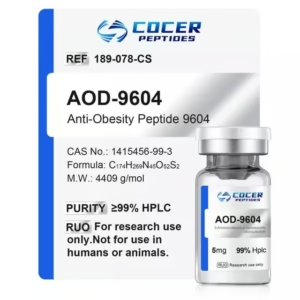
For laboratories investigating adipose tissue biology, the HGH Fragment 176-191 offers a targeted research tool. Unlike full-length growth hormone, which stimulates IGF-1 production and has anabolic effects on muscle and bone, this fragment provides a cleaner experimental model for studying fat cell metabolism . The peptide is also known by alternative designations including AOD-9604 and tyr-hGH 177-191, reflecting its sequence and structural modifications, as listed in the NIH PubChem database.
This 5mg research-grade vial of HGH Fragment 176-191 is supplied as a lyophilized powder for laboratory investigation. Each batch undergoes rigorous quality control to ensure purity and consistency.
Important Notice: This product is supplied strictly for research purposes only and is not intended for human or veterinary use. The World Anti-Doping Agency (WADA) explicitly prohibits growth hormone fragments including HGH 176-191 and AOD-9604 under section S2.2.3 of the Prohibited List . This product is not authorised by the Medicines and Healthcare products Regulatory Agency (MHRA) as a medicine for human use.
Product Specifications
| Feature | Specification |
|---|---|
| Peptide Name | HGH Fragment 176-191 |
| Alternative Names | AOD-9604, tyr-hGH 177-191, Lipolytic fragment |
| Amino Acid Count | 16 |
| Molecular Formula | C₇₈H₁₂₅N₂₃O₂₃S₂ |
| Molecular Weight | 1817.12 g/mol |
| Purity | ≥99% (HPLC) |
| Form | Lyophilized powder |
| Vial Size | 5mg |
| Storage | -20°C (long-term), 2–8°C (reconstituted) |
| For Research Use Only | Not for human or veterinary use |
Mechanism of Action
Lipolytic Activity
Research published in the Journal of Molecular Endocrinology has demonstrated that HGH Fragment 176-191 stimulates hormone-sensitive lipase and inhibits acetyl coenzyme A carboxylase in isolated rat adipose tissues . These effects mimic the actions of intact growth hormone on fat metabolism, but occur without the insulin resistance or glucose intolerance observed with full-length hGH treatment . Chronic treatment of obese Zucker rats with this fragment reduced body weight gain, with average adipocyte cell size decreasing from 110 to 80 micrometres in diameter .
Beta-3 Adrenergic Pathway
The HGH Fragment 176-191 has been studied for its potential interaction with beta-3 adrenergic receptors in adipose tissue. Researchers have suggested that the peptide may upregulate beta(3)-AR RNA expression, potentially enhancing the sensitivity of adipocytes to endogenous lipolytic signals . However, studies in beta(3)-adrenergic receptor knock-out mice indicate that the peptide still produces apparent weight loss effects even when this pathway is disrupted, suggesting additional mechanisms may be involved .
Antilipogenic Effects
Beyond stimulating lipolysis, HGH Fragment 176-191 has been observed to inhibit lipogenesis, the process by which non-fat food materials are converted into body fat . This dual action—increasing fat breakdown while reducing fat storage—distinguishes the fragment from many other metabolic research compounds. The U.S. Food and Drug Administration (FDA) review of nonclinical studies notes that AOD-9604, the active moiety of this fragment, reduces lipogenesis and increases lipolysis and fatty acid oxidation in obese rodent models .
Research Applications
Obesity and Metabolic Research
The HGH Fragment 176-191 has been extensively studied in animal models of obesity. Research published in the Journal of Molecular Endocrinology demonstrated that chronic treatment of obese Zucker rats for 20 days reduced body weight gain and decreased adipocyte cell size . Additional studies in obese (ob/ob) mice showed that treatment with AOD-9604 produced 5-10% less body weight gain compared to vehicle-treated controls, accompanied by increased in-vivo fat oxidation and reduced white and brown adipose tissue .
Adipocyte Metabolism Studies
Laboratory research has examined the effects of growth hormone fragments on adipocyte metabolism using various experimental systems. Early studies published in Endocrinology investigated how different fragment complexes derived from plasmin digests of hGH affect fat cell metabolism, demonstrating that the lipolytic response to growth hormone involves more than one kind of interaction between the hormone and adipocytes . The HGH Fragment 176-191 provides a defined sequence for structure-activity relationship studies.
Structure-Activity Research
The HGH Fragment 176-191 is useful for researchers investigating which portions of the growth hormone molecule are responsible for specific biological activities. Full-length growth hormone has multiple functions, including growth promotion, IGF-1 stimulation, and metabolic regulation. By studying isolated fragments, researchers can map particular activities to specific sequence regions, as explored in ScienceDirect research . This approach has revealed that the disulfide bridges and amino acid residues 32-46 of hGH are not required for lipolytic or antilipolytic activities, information that helps refine understanding of structure-function relationships .
Quality and Purity
Each batch of Cocer Peptides HGH Fragment 176-191 undergoes rigorous quality control:
-
≥99% purity verified by HPLC
-
Mass spectrometry identity confirmation
-
Batch/lot number matching the vial label
-
Certificate of Analysis (COA) available on request
Independent testing has revealed that approximately 30% of sampled peptide products from unregulated sources may have mislabeling, dosing errors, or contamination issues. For researchers sourcing HGH Fragment 176-191, verifying COA documentation is essential for ensuring product integrity and experimental reproducibility.
The Medicines and Healthcare products Regulatory Agency (MHRA) has warned against purchasing unlicensed medicines and research peptides online, noting that such products may be contaminated, mislabelled, or of unknown potency.
Frequently Asked Questions
What is HGH Fragment 176-191?
HGH Fragment 176-191 is a synthetic 16-amino-acid peptide corresponding to the C-terminal region of human growth hormone. It is studied for its lipolytic effects on adipose tissue without the growth-promoting or insulin-resistance effects of full-length growth hormone .
How does HGH Fragment 176-191 differ from full growth hormone?
Full-length growth hormone stimulates IGF-1 production and has anabolic effects on muscle and bone, and can cause insulin resistance at higher doses. The HGH Fragment 176-191 retains lipolytic activity without these other biological actions, making it a more targeted research tool for studying fat cell biology .
Is HGH Fragment 176-191 approved for human use?
No. The HGH Fragment 176-191 is not approved by the FDA or MHRA for any indication. The U.S. Food and Drug Administration (FDA) has proposed that AOD-9604, the active moiety of this fragment, not be included on the 503A Bulk Drug Substances List for compounding, citing limited safety information . This product is supplied strictly for research purposes only.
What purity level can I expect?
Our HGH Fragment 176-191 is provided at ≥99% purity, verified by HPLC with third-party testing.
How should HGH Fragment 176-191 be stored?
Store lyophilized powder at -20°C for long-term stability. Reconstituted material should be stored at 2–8°C and used promptly following standard laboratory protocols.
Is this product prohibited in sport?
Yes. The World Anti-Doping Agency (WADA) explicitly prohibits growth hormone fragments including HGH 176-191 and AOD-9604 under section S2.2.3 of the Prohibited List . This product is for laboratory research use only and is not intended for athletic use.
Conclusion
The HGH Fragment 176-191 represents a targeted research tool for investigating lipolytic mechanisms and adipose tissue biology. With its high-purity formulation and comprehensive quality documentation, this 5mg vial enables researchers to study fat cell metabolism without the confounding effects of full-length growth hormone. For UK laboratories sourcing HGH Fragment 176-191 for research applications, this product offers documented composition, ≥99% purity, and batch-specific COA support.
Ready to Advance Your Research?
Order premium HGH Fragment 176-191 (5mg) for your laboratory today.
Reviews
There are no reviews yet.