
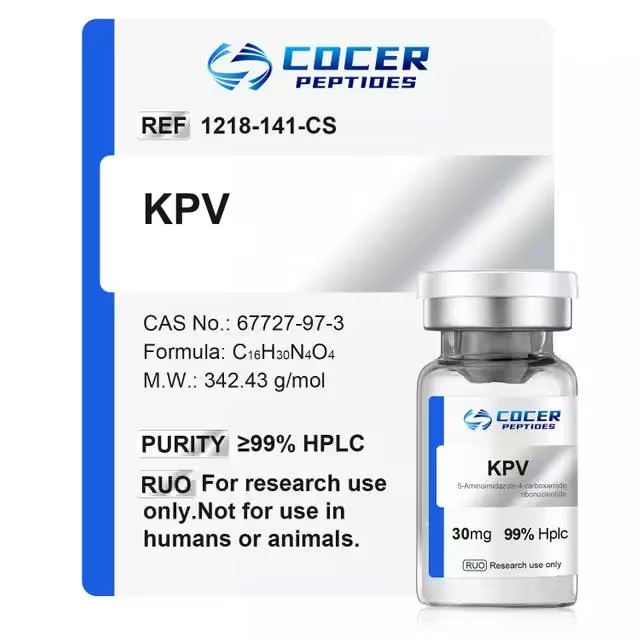
kpv 30mg
Original price was: £220.00.£205.00Current price is: £205.00.
🧬 KPV Peptide – 30mg Research Grade
-
🔬 High-purity anti-inflammatory tripeptide
-
✅ ≥99% purity, HPLC tested
-
📦 10 vials included
-
💧 Free bacteriostatic water with every order
-
🧪 For laboratory research use only
Order now – 10 vials + free Bac Water! 🚀
15% DISCOUNT ON CHECKOUT WITH CRYPTO
- Satisfaction Guaranteed
- No Hassle Refunds
- Secure Payments
Description
Premium KPV Peptide – 30mg UK Research Grade
Product Overview
If you are looking for KPV peptide for laboratory research, Cocer Peptides supplies a high-purity, 30mg presentation of this extensively studied tripeptide. KPV (Lysine-Proline-Valine) is a synthetic C-terminal fragment of alpha-melanocyte-stimulating hormone (α-MSH), a naturally occurring neuropeptide known for its anti-inflammatory and immunomodulatory properties, as documented in the NIH PubChem database. The KPV sequence represents the smallest fragment of α-MSH that retains the anti-inflammatory activity of the parent molecule while lacking the pigment-inducing effects associated with full-length melanocortin peptides.
Researchers investigating KPV peptide often do so because of its well-characterised mechanism of action. Studies published in ScienceDirect have demonstrated that KPV inhibits the activation of NF-κB and MAP kinase inflammatory signalling pathways, and reduces pro-inflammatory cytokine secretion. Unlike the full α-MSH hormone, KPV peptide does not mediate its effects through melanocortin receptors, instead acting through inhibition of IL-1β functions according to research indexed in the NIH PMC database.
This 30mg research-grade presentation of KPV peptide is supplied as a lyophilized powder for laboratory investigation of inflammatory signalling, immune modulation, and tissue repair mechanisms.
Important Notice: This product is supplied strictly for laboratory research use only and is not intended for human or veterinary use. KPV has no FDA-approved therapeutic use and no established marketing authorization for human use in the United Kingdom or European Union. The FDA’s Pharmacy Compounding Advisory Committee reviewed KPV in July 2026, though this does not constitute approval or endorsement, as noted by the FDA.
Product Specifications
| Feature | Specification |
|---|---|
| Peptide Name | KPV (Lysine-Proline-Valine) |
| Amino Acid Count | 3 |
| Molecular Formula | C₁₆H₃₀N₄O₄ |
| Molecular Weight | ~342.4 Da |
| Purity | ≥99% (HPLC) |
| Form | Lyophilized powder |
| Vial Size | 30mg |
| Storage | -20°C (long-term), 2–8°C (reconstituted) |
| For Research Use Only | Not for human or veterinary use |
The peptide sequence Lys-Pro-Val and CAS number 81734-92-7 are documented in the NIH PubChem database.
Mechanism of Action
NF-κB Pathway Inhibition
KPV peptide exerts its primary anti-inflammatory effects through inhibition of the NF-κB signalling pathway. NF-κB is a transcription factor that controls expression of numerous pro-inflammatory genes, including TNF-α, IL-1β, and IL-6. Research published in ScienceDirect has demonstrated that nanomolar concentrations of KPV inhibit activation of NF-κB and MAP kinase inflammatory signalling pathways. This inhibition occurs through a cell receptor-based mechanism, as the anti-inflammatory effect of KPV is not melanocortin receptor-mediated according to NIH PubMed.
PepT1-Mediated Transport
A key feature distinguishing KPV peptide from larger peptides is its interaction with PepT1, a di/tripeptide transporter expressed in intestinal epithelial cells. PepT1 expression is upregulated in inflamed colon tissue during inflammatory bowel disease, as documented in ScienceDirect. Research has shown that KPV is transported into cells via PepT1, suggesting a targeted delivery mechanism to inflamed tissues. This transporter-mediated uptake may explain the peptide’s observed efficacy in gastrointestinal inflammation models.
Cytokine Modulation
KPV peptide modulates the balance between pro-inflammatory and anti-inflammatory cytokines. Studies have demonstrated that KPV reduces secretion of pro-inflammatory cytokines including TNF-α and IL-1β while upregulating IL-10, an anti-inflammatory cytokine. Research published in ScienceDirect confirmed that KPV inhibits reactive oxygen species production and decreases expression of apoptosis-related proteins through suppression of the redox-sensitive transcription factor NF-κB, as further detailed in NIH PMC.
Research Applications
Inflammatory Bowel Disease Research
KPV peptide has been extensively studied in models of intestinal inflammation. Research has demonstrated that oral administration of KPV reduces the incidence of DSS- and TNBS-induced colitis in mice, as indicated by decreased pro-inflammatory cytokine expression, according to findings published in Gastroenterology. The peptide’s PepT1-mediated transport into intestinal cells makes it particularly relevant for studying inflammatory bowel disease mechanisms, with additional data available via NIH PubMed.
Wound Healing and Skin Research
KPV peptide has shown promise in corneal epithelial wound healing studies. Research in rabbits demonstrated that topical KPV administration facilitated complete re-epithelialization within 60 hours, with a mechanism involving nitric oxide disposition in corneal tissue. Recent studies published in ScienceDirect demonstrated that KPV mitigates fine dust (PM10)-induced keratinocyte apoptosis and inflammation by regulating oxidative stress and modulating the MAPK/NF-κB pathway, as indexed in NIH PMC.
Immune Signalling Studies
KPV peptide modulates immune cell function through multiple pathways. Research has shown that KPV inhibits polymorphonuclear leukocyte migration in crystal-induced peritonitis models, with a maximal inhibition of 42% at 9 nmol. The peptide has also been studied for its effects on chemotherapy-induced oral mucositis, where KPV hydrogel formulations significantly inhibited IL-1β and TNF-α while upregulating IL-10, according to research published in Frontiers in Immunology.
Oral Mucositis Research
Recent research published in NIH PubMed demonstrated that KPV incorporated into a mucoadhesive hydrogel improved food intake and body weight recovery in rats with chemotherapy-induced oral mucositis, while also promoting tissue repair through CK10 and PCNA expression. Additional studies indexed in NIH PMC have examined KPV in similar mucosal repair models.
Quality and Purity
Every batch of Cocer Peptides KPV peptide undergoes rigorous quality control:
-
≥99% purity verified by HPLC
-
Correct molecular weight confirmed by mass spectrometry
-
Third-party tested with Certificates of Analysis (COA) available
-
Batch/lot number matching the vial label
Independent testing has revealed that approximately 30% of sampled peptide products from unregulated sources may have mislabeling, dosing errors, or contamination issues. For researchers sourcing KPV peptide, verifying COA documentation is essential for ensuring product integrity and experimental reproducibility, as emphasised by the FDA.
The Medicines and Healthcare products Regulatory Agency (MHRA) has warned against purchasing unlicensed medicines and research peptides online, noting that such products may be contaminated, mislabelled, or of unknown potency, according to GOV.UK.
Frequently Asked Questions
What is KPV peptide?
KPV peptide is a synthetic tripeptide composed of lysine, proline, and valine. It represents the C-terminal fragment of alpha-melanocyte-stimulating hormone (α-MSH) and is studied for its anti-inflammatory and immunomodulatory properties, as documented in the NIH PubChem database.
How does KPV differ from full α-MSH?
KPV peptide retains the anti-inflammatory activity of α-MSH but lacks the pigment-inducing effects associated with the full hormone. The shorter sequence also offers improved stability and ease of synthesis for research applications, as noted by ScienceDirect.
What purity level can I expect?
Our KPV peptide is provided at ≥99% purity, verified by HPLC with third-party testing.
What research applications is KPV used for?
KPV peptide is studied in inflammatory bowel disease research, wound healing models, immune signalling studies, skin keratinocyte research, and oral mucositis research, according to the NIH PubMed database.
How should KPV peptide be stored?
Store lyophilized powder at -20°C for long-term stability. Reconstituted material should be stored at 2–8°C and used promptly following standard laboratory protocols.
Is this product suitable for human use?
No. This product is supplied for research purposes only and is not intended for human or veterinary use. KPV has no human clinical trials, no established safety data, and no regulatory approval for human use, as confirmed by the FDA.
Conclusion
KPV peptide represents a valuable research tool for investigating inflammatory signalling pathways, immune modulation, and tissue repair mechanisms. With its high-purity formulation and comprehensive quality documentation, this 30mg presentation from Cocer Peptides enables researchers to study NF-κB pathway inhibition, PepT1-mediated transport, and the peptide’s diverse anti-inflammatory effects, as documented in ScienceDirect. For scientists seeking KPV peptide for laboratory applications, this product offers consistent purity and full analytical transparency. Those who source KPV peptide from Cocer Peptides receive batch-specific COA documentation, ensuring experimental reproducibility across studies, consistent with guidance from the NIH PubMed database.
Ready to Advance Your Research?
Order premium KPV peptide (30mg) for your laboratory today.
Related products
-
Sale!
Cagrilintide 10mg
Price range: £112.00 through £175.00Select options This product has multiple variants. The options may be chosen on the product page -
Sale!
Retatrutide
Price range: £65.00 through £250.00Select options This product has multiple variants. The options may be chosen on the product page -
Sale!
Tesamorelin
Price range: £100.00 through £205.00Select options This product has multiple variants. The options may be chosen on the product page -
Sale!
Tirzepatide
Price range: £45.00 through £250.00Select options This product has multiple variants. The options may be chosen on the product page
Reviews
There are no reviews yet.