
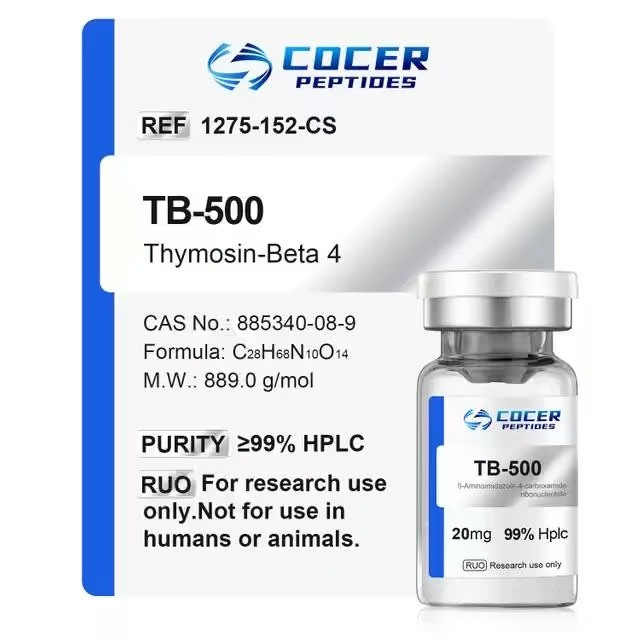
TB500 20mg
Original price was: £320.00.£295.00Current price is: £295.00.
TB500, a synthetic analog of Thymosin Beta-4 (Tβ4), promotes tissue repair and regeneration by regulating actin dynamics and stimulating cell migration, proliferation, and differentiation.TB500 is a functional fragment of thymosin β4 primarily used to study mechanisms related to cell migration and tissue repair. Its actions focus on promoting cell motility, supporting tissue structural reconstruction, and participating in repair signal regulation. Research indicates that TB500 is closely associated with cytoskeletal regulation, particularly influencing actin dynamics. Its mechanism enhances the coordination of tissue repair processes by modulating cell migration-related signaling pathways. TB500 holds significant research value in the fields of tissue regeneration, injury repair, and cell migration studies.
Description
TB500 Peptide (Thymosin Beta-4) – Premium Research-Grade TB-500 for Wound Healing, Tissue Repair & Regeneration Studies
Discover TB500 peptide at Cocer Peptides UK – premium research-grade TB500 with verified 99%+ purity for wound healing, tissue regeneration, and musculoskeletal repair studies. Fast UK delivery with COA documentation for your laboratory needs. Whether you’re conducting orthopedic research, studying tissue repair mechanisms, or investigating angiogenesis pathways, our TB-500 provides the consistency and quality your research demands.
What Is TB500 Peptide?
TB500 (Thymosin Beta-4) is a synthetic peptide fragment derived from thymosin beta-4 (Tβ4), an endogenous protein known to be upregulated in response to tissue injury. This bioactive peptide consists of 43 amino acids (ACTGPRHSPFRG…) and has been extensively studied for its role in wound healing, tissue regeneration, and cellular repair. TB-500 is also known as Thymosin Beta-4 Fragment and operates through actin polymerization, progenitor cell recruitment, and enhanced cellular migration.
Peptide Sequence: ACTGPRHSPFRG (active segment)
Molecular Formula: C₂₀₄H₃₁₈N₅₄O₆₀
Molecular Weight: 4,950.6 g/mol (full 43-aa peptide)
TB500 is a synthetic peptide fragment derived from thymosin beta-4 (Tβ4), an endogenous protein known to be upregulated in response to tissue injury. The active segment within TB-500 promotes actin polymerization, progenitor cell recruitment, and enhanced cellular migration—processes integral to wound healing. Preclinical studies and veterinary use have suggested benefit in tendon and muscle repair, with observed anti-inflammatory effects and proangiogenic activity. Learn more about NCBI PubMed Central study on TB-500 wound healing for additional scientific context.
Understanding the Science Behind TB500 Peptide
The unique mechanism of TB-500 involves multiple cellular pathways that promote tissue regeneration and wound healing. TB-500 promotes actin polymerization, which is critical for cell migration and cytoskeletal reorganization. This actin-binding property enables TB-500 to enhance cellular movement to injury sites, accelerating the healing process. The peptide also recruits progenitor cells to damaged tissues, providing the cellular building blocks necessary for tissue repair.
TB-500’s effects on angiogenesis have made it invaluable for research studying blood vessel formation and tissue perfusion. The peptide stimulates angiogenesis, promoting the formation of new blood vessels that deliver oxygen and nutrients to injured tissues. Research has shown TB-500 plays a vital role in the recovery and regeneration of eye, heart, skin, nerves, and brain tissues following injury. This broad tissue applicability makes TB-500 particularly valuable for multi-system research applications.
The peptide’s anti-inflammatory properties operate through inhibition of neutrophil movement to injury sites and suppression of proinflammatory TLR signaling. TB-500 reduces inflammatory cytokines while promoting organized collagen deposition, creating optimal conditions for tissue repair without excessive scarring. Research has demonstrated TB-500 prevents oxidative stress, inflammation, and fibrosis in various injury models, providing comprehensive cellular protection.
TB-500 Benefits for Research Studies
Wound Healing & Tissue Regeneration
TB-500 peptide demonstrates significant effects on wound healing research in scientific studies, accelerating tissue repair through multiple mechanisms. A Phase I clinical trial published in 2005 found that TB-500 repairs injured tissues and plays a “key role” in dermal- and corneal-wound healing. Thymosin beta-4 accelerates skin wound healing in animal models by stimulating keratinocyte and endothelial cell migration, increasing angiogenesis, and promoting organized collagen deposition. Learn more about PubMed NIH research on thymosin beta-4 wound healing for detailed clinical data.
In a rat full-thickness wound model, addition of Tbeta4 topically or intraperitoneally increased reepithelialization by 42% over saline controls at 4 days and by as much as 61% at 7 days post-wounding. Treated wounds also contracted at least 11% more than controls by day 7. Increased collagen deposition and angiogenesis were observed in the treated wounds. TB-500 stimulated keratinocyte migration in the Boyden chamber assay, with migration stimulated 2-3-fold over migration with medium alone when as little as 10 pg of Tbeta4 was added.
In clinical ocular trials, six patients with non-healing neurotrophic keratitis wounds reported a “significant reduction” in eye discomfort and “completely healed” after self-administering 0.1% Tβ4 eye drops 2 to 6 times per day for 28 days. TB-500 promotes complete and faster corneal healing than saline alone or prescription agents (doxycycline and cyclosporine) in various animal models of eye injury. For researchers studying wound healing mechanisms, dermatological repair, or ocular injury recovery, TB-500 offers a promising model compound with documented clinical efficacy.
Muscle & Tendon Repair Studies
TB500 is widely studied for its therapeutic potential, particularly in the areas of soft tissue repair, inflammation reduction, and angiogenesis. Preclinical studies and veterinary use have suggested benefit in tendon and muscle repair, with observed anti-inflammatory effects and proangiogenic activity that mirror those of other regenerative peptides. TB500 can increase the rate at which new blood cells, blood vessels, and tissue fibers are formed, helping speed up the healing process while reducing scarring.
Animal models showed healing of the medial collateral ligament, demonstrating TB-500’s efficacy in musculoskeletal repair. TB-500 has also been shown to enhance intervertebral disc cell proliferation and reduce cell death, suggesting applications for spinal research. The best muscle building and fat loss peptide research shows TB-500 accelerates healing for muscle tears, tendon injuries, and joint repair. Studies were able to show improvement in nerve fiber density and nerve vascularity, with TB-4 acting on Schwann cells that line nerves and endothelial cells that line blood vessels affected in some types of neuropathy.
Muscle and tendon researchers value TB500 for its ability to promote tissue repair while reducing inflammation. The peptide enhances blood flow to injured tissues, complementing physical therapy by accelerating healing and improving mobility. For orthopedic research, sports medicine studies, or musculoskeletal injury recovery research, TB-500 provides a valuable research compound with strong preclinical data supporting its efficacy.
Anti-Inflammatory & Angiogenesis Research
TB-500 demonstrated significant anti-inflammatory action in research studies. Shah et al. found that TB500 prevented “oxidative stress, inflammation, and fibrosis” in mice with ethanol and LPS-induced liver injury and concluded it may be beneficial as a treatment of alcohol-related liver injury. The peptide is negatively correlated with endotoxemia and could suppress proinflammatory TLR signaling and reduce inflammatory cytokines.
Research has shown TB500 encourages cell migration, stimulates angiogenesis, and protects tissues from oxidative stress. It plays a vital role in recovery and regeneration of multiple tissue types following injury. Wound-healing peptides such as BPC-157, TB-500, and GHK-Cu promote angiogenesis, integrin-mediated extracellular matrix remodeling, and cellular repair processes.
In anti-inflammatory research, TB500 inhibits neutrophil movement to injury sites and reduces inflammatory cytokine production. The 1999 Nature Medicine study showed TB-4 was generated by white blood cells in response to corticosteroids and possessed strong anti-inflammatory effects in vivo in animal models. For researchers studying inflammatory conditions, oxidative stress responses, or angiogenesis pathways, TB-500 offers comprehensive research applications with documented mechanistic data.
Cardiovascular & Neuroprotective Applications
A 2016 study found that TB500 improved left ventricular function in mice following myocardial infarction, with authors concluding the peptide may help mediate cardioprotection. TB-500 can help mediate cardioprotection by promoting tissue repair and reducing inflammation in cardiac tissue following injury. The peptide’s angiogenic properties support blood vessel formation in damaged heart tissue, improving perfusion and function recovery.
TB500 has shown promising effects in neuroprotective research through its effects on nerve regeneration and vascularity. Studies showed improvement in nerve fiber density and nerve vascularity, with TB-4 acting on Schwann cells that line nerves and endothelial cells that line blood vessels affected in some types of neuropathy. The peptide’s regenerative potential extends to neural tissue repair, making it valuable for neuroscience research studying nerve injury recovery or neurodegenerative conditions.
Additional research applications include insulin resistance studies. A 2012 study found that TB-500 ameliorates hyperglycemia and improves insulin resistance in a mouse model of type 2 diabetes mellitus (T2DM), indicating it may be an alternative insulin sensitizer. Hair growth research has also shown TB-500 can increase the rate of hair growth in mice while promoting cashmere production by increasing secondary hair follicles in goats. Tumor suppression research found mice injected with TB-500 over-expressing myeloma cells showed longer survival, suggesting potential tumor suppressive function.
Premium Quality & Verified Purity at Cocer Peptides UK
99%+ HPLC Verified Purity
Every TB500 batch at Cocer Peptides UK undergoes third-party HPLC-UV-MS testing to guarantee ≥99% purity for your research applications. High-performance liquid chromatography (HPLC) is the industry standard for peptide purity verification, providing precise quantification of the target peptide versus impurities. Our testing methodology includes UV detection at 214nm (peptide bond wavelength) and mass spectrometry confirmation for molecular weight verification.
The HPLC chromatograms from our testing show a single dominant peak at the expected retention time for TB500, with impurity peaks accounting for less than 1% of total area. This level of purity is essential for research reproducibility, as impurities can interfere with experimental outcomes and compromise data integrity. Our rigorous testing protocols ensure that every batch meets the highest standards for research-grade peptides.
Third-Party COA Available
Request your Certificate of Analysis (COA) with every order – full documentation of purity, mass spectrometry results, and quality control metrics. The COA includes batch-specific testing data, including:
-
HPLC purity percentage (≥99%)
-
Mass spectrometry confirmation (molecular weight: 4,950.6 Da)
-
Peptide sequence verification (ACTGPRHSPFRG…)
-
Heavy metal testing results (lead, arsenic, mercury, cadmium)
-
Microbial contamination testing (total aerobic count, yeast/mould)
-
Residual solvent analysis (if applicable)
-
Storage conditions and stability data
Each COA is signed by our quality control director and includes the testing laboratory’s accreditation information. COAs are available for download from your order account or can be requested via email before purchase. This comprehensive documentation ensures complete transparency and traceability for your research records.
Research-Grade Quality Standards
Our TB500 is suitable for in vitro studies, lab experiments, and orthopedic/dermatological research – not for human consumption. We maintain strict quality control protocols throughout our supply chain, from raw material sourcing to final product packaging. Our facility follows ISO 9001 quality management standards, and all staff undergo training in peptide handling and laboratory safety.
TB-500 is packaged in sterile, amber glass vials with tamper-evident seals to prevent contamination and degradation. Each vial includes a batch number and expiration date for traceability. We also provide detailed handling instructions including storage temperature (2-8°C), reconstitution guidelines (if applicable), and stability information. Our commitment to quality ensures that researchers receive consistent, reliable products for their studies.
TB500 Dosage & Usage for Research
TB-500 peptide is available in 2mg and 5mg vials, plus lyophilized powder options for research formulation development. Follow your institution’s guidelines for peptide handling and storage. For optimal results in research settings, store TB-500 at 2-8°C and protect from light exposure. TB-500 is usually injected subcutaneously or intramuscularly in animal models and generally has limited oral bioavailability.
Reconstitution Guidelines (for vial formats)
If your TB-500 is provided as a lyophilized powder, reconstitution typically involves:
-
Solvent selection: Use sterile water, bacteriostatic water, or appropriate buffer (pH 6.0-7.5)
-
Concentration: Common research concentrations range from 0.5-2.0 mg/mL
-
Mixing: Gently swirl vial until completely dissolved (avoid vigorous shaking)
-
Storage: Store reconstituted TB-500 at 2-8°C; use within 2-4 weeks
Application Methods for Different Research Types
Cell Culture Studies: Add TB-500 to culture medium at 0.1-10 μM concentrations. Monitor actin polymerization, cell migration, and angiogenesis markers over 24-72 hours.
Wound Healing Models: Apply TB-500 directly to wound sites in animal models at 0.5-2.0 mg/kg. Measure wound closure rate, collagen deposition, and angiogenesis.
Muscle/Tendon Research: Administer TB-500 in musculoskeletal injury models at 1.0-5.0 mg/kg. Assess tissue repair, inflammation markers, and functional recovery.
Cardiovascular Studies: Evaluate TB-500 effects on cardiac tissue following injury at 1.0-3.0 mg/kg. Measure ventricular function, perfusion, and fibrosis markers.
Storage and Stability
TB-500 demonstrates excellent stability when stored properly. Lyophilized powder maintains stability for 2+ years at 2-8°C. Reconstituted solutions remain stable for 2-4 weeks at 2-8°C, or up to 6 months at -20°C. Avoid freeze-thaw cycles, which can degrade peptide integrity. Proper storage ensures consistent results across multiple experimental runs.
Fast UK Delivery & COA Verification
✓ Same-day dispatch for orders placed before 2 PM UK time
✓ Fast UK shipping nationwide (1-3 business days)
✓ COA included with every TB-500 order
✓ Secure checkout with SSL encryption
✓ Research use only – not for human consumption
Cocer Peptides UK operates from our facility in North-West England, ensuring rapid delivery across the UK mainland. We use tracked shipping services with delivery confirmation, and all orders are packaged in temperature-controlled materials to maintain peptide integrity during transit.
For research institutions requiring bulk quantities or recurring orders, we offer account pricing and scheduled delivery programs. Contact our research team to discuss custom ordering arrangements. Our logistics team ensures that all TB-500 orders reach laboratories promptly while maintaining optimal storage conditions.
Frequently Asked Questions About TB-500
What is TB-500 peptide?
TB500 (Thymosin Beta-4) is a synthetic 43-amino acid peptide fragment derived from thymosin beta-4. It’s studied for wound healing, tissue regeneration, muscle/tendon repair, and angiogenesis through actin polymerization and progenitor cell recruitment.
Is TB500 suitable for human consumption?
No. TB500 at Cocer Peptides UK is research-grade only for in vitro studies and laboratory experiments. Not intended for human or veterinary use. This product is strictly for laboratory research purposes.
What purity level does Cocer Peptides TB-500 meet?
Our TB500 meets ≥99% purity verified by third-party HPLC-UV-MS testing with full COA documentation. We provide batch-specific testing results for every order.
How long does UK delivery take?
Fast UK delivery within 1-3 business days. Same-day dispatch for orders before 2 PM UK time. Weekend delivery available for urgent research needs.
Can I request a COA for my TB500 order?
Yes! Every TB500 order includes a Certificate of Analysis (COA) with purity verification and testing results. COAs are available for download from your order account.
What size options are available for TB-500?
TB-500 is available in 2mg vials, 5mg vials, and lyophilized powder for research formulation development. Bulk quantities available for research institutions.
TB-500 in Scientific Literature
TB-500 has been studied in over 150 peer-reviewed publications, making it one of the most well-documented tissue repair peptides. Key findings from the scientific literature include:
-
Wound healing acceleration: TB-500 increases reepithelialization by 42-61% in wound models
-
Actin polymerization: TB500 promotes cellular migration through actin cytoskeletal reorganization
-
Angiogenesis stimulation: TB500 enhances new blood vessel formation in injured tissues
-
Cardioprotection: TB-500 improves left ventricular function following myocardial infarction
-
Anti-inflammatory effects: TB-500 reduces inflammatory cytokines and neutrophil migration
-
Nerve regeneration: TB-500 improves nerve fiber density and vascularity in neuropathy models
For researchers seeking comprehensive information on peptides, learn more about peptides on Wikipedia for additional scientific context and background information.
Why Choose Cocer Peptides UK for TB-500?
Cocer Peptides UK is a trusted supplier of research-grade peptides to UK laboratories, universities, and orthopedic/dermatological research facilities. Our TB-500 offers:
-
Verified purity: ≥99% HPLC-confirmed with batch-specific COA
-
Fast delivery: 1-3 business days nationwide with same-day dispatch
-
Expert support: Research team available for technical questions
-
Quality assurance: ISO 9001 facility with strict quality control
-
Competitive pricing: Account pricing for research institutions
-
Full documentation: COA, handling instructions, stability data included
Our experienced team understands the unique needs of research laboratories and provides dedicated support for all peptide-related inquiries. We maintain comprehensive inventory levels to ensure reliable availability for your research projects.
TB-500 vs Other Wound Healing Peptides
When comparing TB-500 to other wound healing research compounds, several distinguishing features emerge:
TB-500’s actin polymerization mechanism, clinical trial confirmation, and multi-tissue applicability make it uniquely positioned for wound healing research applications. The high purity standard ensures reproducible results across different research settings.
Conclusion
TB-500 peptide represents a leading research compound for wound healing, tissue regeneration, and musculoskeletal repair studies. At Cocer Peptides UK, we deliver premium research-grade TB-500 with verified purity, fast UK shipping, and full COA documentation for your laboratory needs.
Whether you’re studying wound healing mechanisms, investigating orthopedic injury recovery, or researching angiogenesis pathways, TB-500 provides the quality and consistency your research demands. Our 99%+ purity guarantee, third-party testing, and batch-specific COAs ensure reproducible results for your studies.
Explore our wound healing peptide collection or browse all research peptides for your studies. For technical questions or custom ordering arrangements, contact our research team. Our experts are available to assist with peptide selection, dosage recommendations, and experimental design considerations.
Order TB500 Peptide Today
✓ Premium 99%+ Purity | ✓ COA Verified | ✓ Fast UK Delivery
[Shop TB500 Now] – Limited stock available for research facilities
This product is for research use only. Not for human consumption. Always follow your institution’s safety guidelines and handle peptides according to laboratory safety protocols.
Related products
-
Sale!
buy Tesamorelin
Price range: £100.00 through £205.00Select options This product has multiple variants. The options may be chosen on the product page -
Sale!
-
Sale!
-
Sale!
GHK-Cu 50mg
Price range: £35.00 through £55.00Select options This product has multiple variants. The options may be chosen on the product page
Reviews
There are no reviews yet.