
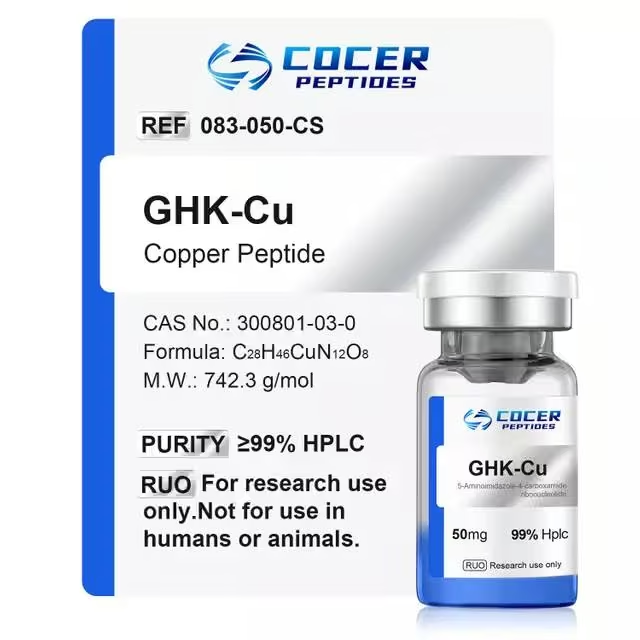
GHK-Cu
Price range: £35.00 through £55.00
15% DISCOUNT ON CHECKOUT WITH CRYPTO
- Satisfaction Guaranteed
- No Hassle Refunds
- Secure Payments
Description
Premium GHK-Cu – Research Grade Copper Peptide
Product Overview
If you are looking for GHK-Cu for laboratory research, Cocer Peptides supplies a high-purity, research-grade version of this naturally occurring copper-binding tripeptide. GHK-Cu (glycyl-L-histidyl-L-lysine copper complex) is a small tripeptide first identified in human plasma that forms a stable complex with copper(II) ions. This copper-binding property allows it to function as an endogenous signalling molecule involved in metal ion transport and cellular regulation, as documented in the NIH PubChem database.
The GHK-Cu peptide is widely studied in the scientific literature for its role in tissue remodelling and extracellular matrix regulation. According to a comprehensive review published in PubMed, it activates a plethora of remodelling-related processes including chemoattraction of repair cells, anti-inflammatory actions, and increased protein synthesis of collagen, elastin, and growth factors . In preclinical research models, exposure to this copper peptide has been associated with altered gene expression patterns and modulation of signalling pathways related to extracellular matrix dynamics and oxidative stress response.
Researchers who study this compound often examine its copper-transporting properties and its effects on cellular growth, differentiation, and tissue remodelling. The peptide’s small molecular size allows it to readily interact with cellular receptors and facilitate copper transport into cells, as described in Nature. For those comparing this peptide with other regenerative compounds, our BPC-157 product page and TB-500 product page provide detailed research documentation on complementary repair peptides.
Important Notice: This product is supplied strictly for laboratory research use only and is not intended for human or veterinary use. Injectable GHK-Cu is not FDA-approved and is considered off-label for medical use, as noted by the FDA. Aesthetic medicine experts have cautioned that there are no adequately powered human trials of injected GHK-Cu for skin quality, hair growth, or systemic anti-ageing, as reported by Aesthetic Medicine. This product is not authorised by the Medicines and Healthcare products Regulatory Agency (MHRA) as a medicine.
Product Specifications
| Feature | Specification |
|---|---|
| Peptide Name | GHK-Cu (Copper Tripeptide-1) |
| Sequence | Glycyl-L-histidyl-L-lysine copper complex |
| CAS Number | 49557-75-7 |
| Molecular Formula | C₁₄H₂₂CuN₆O₄ |
| Molecular Weight | ~403.92 g/mol |
| Purity | ≥99% (HPLC) |
| Form | Lyophilized powder (blue to deep blue) |
| Storage | -20°C, desiccated, protected from light |
| For Research Use Only | Not for human or veterinary use |
Mechanism of Action
Copper Transport and Cellular Signalling
GHK-Cu functions as a carrier and regulator of bioavailable copper within biological systems. Copper is an essential trace element required for numerous enzymatic and structural proteins involved in redox balance, extracellular matrix organisation, and cellular metabolism. By acting as a carrier for copper, the peptide plays a role in maintaining metal homeostasis and influencing downstream pathways linked to cellular growth and differentiation, as detailed in ScienceDirect.
Extracellular Matrix Modulation
Research has demonstrated that GHK-Cu peptide stimulates synthesis of collagen I and III, elastin, decorin, and glycosaminoglycans, while modulating the MMP/TIMP balance and supporting angiogenesis . According to mechanistic studies indexed in ScienceDirect, it exerts anti-inflammatory effects potentially via modulation of the JAK1-STAT3 pathway .
Gene Expression Effects
The peptide has been found to reset genes of diseased cells from patients with cancer or COPD to a more healthy state. Cancer cells reset their programmed cell death system while COPD patients’ cells shut down tissue destructive genes and stimulate repair and remodelling activities, as documented in PubMed research . Additional gene expression data is available through the NIH PMC database.
Research Applications
Skin Remodelling and Collagen Synthesis
GHK-Cu is one of the most extensively studied peptides in dermatological research. Controlled studies on aged skin have demonstrated that it tightens skin, improves elasticity and firmness, reduces fine lines, wrinkles, photodamage, and hyperpigmentation . A 2026 study published via Wiley Online Library evaluated a cream containing 0.2% GHK-Cu over 56 days, measuring improvements in forehead lines, periorbital lines, nasolabial lines, and skin elasticity . Further dermatological research is indexed through the NIH PubMed database.
Wound Healing and Tissue Repair
Research on this copper peptide has demonstrated its ability to accelerate wound healing in numerous models. Preclinical studies show that it promotes proliferation and angiogenesis, and novel materials formulated with it have demonstrated broad application prospects in tissue repair . A Phase 2 clinical trial registered on ClinicalTrials.gov is currently evaluating topical GHK-Cu gel for acute skin wound healing in healthy adults . Researchers investigating regenerative compounds often study it alongside KPV peptides for anti-inflammatory research applications.
Hair Follicle Research
The GHK-Cu peptide has been studied for its effects on hair follicle biology. Research indicates that it can enlarge hair follicles and support growth, with experimental studies suggesting copper peptides can convert vellus hairs into thicker terminal hairs and prolong the anagen phase . These findings support the peptide’s application in hair restoration research, with additional data available through ScienceDirect.
Anti-Inflammatory and Antioxidant Studies
Research published in ScienceDirect has examined GHK-Cu in silicosis models, demonstrating that it attenuates lung inflammation and fibrosis by targeting peroxiredoxin 6. The study showed that it significantly reduced pulmonary inflammation and oxidative stress markers . For broader context on peptide research methodologies, see our Peptide Research Guide blog.
Quality and Purity
Every batch of Cocer Peptides GHK-Cu undergoes rigorous quality control:
-
≥99% purity verified by HPLC
-
Correct molecular weight confirmed by mass spectrometry
-
Third-party tested with Certificates of Analysis (COA) available
-
Batch/lot number matching the vial label
Research-grade GHK-Cu peptide requires batch-level analytical certification. The minimum acceptable COA covers HPLC purity ≥99%, mass-spectrometry identity confirmation, and bacterial endotoxin quantification. Guidance on analytical validation of peptide research materials is available through the National Institute for Biological Standards and Control (NIBSC), part of the MHRA. For full transparency on our testing procedures, visit our COA and Lab Results page.
Frequently Asked Questions
What is GHK-Cu?
GHK-Cu is a naturally occurring copper-binding tripeptide (glycyl-L-histidyl-L-lysine) complexed with a copper ion. It is studied in laboratory research for roles in tissue remodelling, collagen synthesis, and cellular signalling, as described in PubMed.
What is the GHK-Cu peptide used for in research?
The GHK-Cu peptide is studied in skin remodelling, wound healing, hair follicle biology, anti-inflammatory pathways, and extracellular matrix regulation. Research applications span dermatology, tissue engineering, and regenerative medicine, with studies indexed in ScienceDirect. For related compounds, explore our regenerative peptides category.
Does GHK-Cu decline with age?
Yes. Research indicates that circulating GHK levels are present in human plasma, saliva, and urine but decline with age . This decline is likely downstream of chronic inflammation and altered protein turnover, as documented in NIH PubMed.
What purity level can I expect?
Our GHK-Cu is provided at ≥99% purity, verified by HPLC with third-party testing.
How should GHK-Cu be stored?
Store lyophilized powder at -20°C, desiccated, and protected from light. Reconstituted material should be used promptly following standard laboratory protocols.
Is this product suitable for human use?
No. This product is supplied for research purposes only and is not intended for human or veterinary use. Injectable GHK-Cu has no adequately powered human trials for any indication and is not approved by regulatory authorities, as confirmed by the FDA and MHRA.
Conclusion
GHK-Cu represents a widely studied research peptide for investigating copper-mediated signalling, extracellular matrix regulation, and tissue remodelling pathways. With its high-purity formulation and comprehensive quality documentation, this product from Cocer Peptides enables researchers to study the peptide’s diverse biological effects in controlled laboratory settings. For scientists seeking research-grade material for laboratory applications, this product offers consistent purity and full analytical transparency. Learn more about our laboratory standards on our About Us page.
Ready to Advance Your Research?
Order premium GHK-Cu for your laboratory today.
Additional information
| mg | 100mg, 50mg |
|---|
Related products
-
Sale!
-
Sale!
-
Sale!
SS-31 10mg
Price range: £47.00 through £125.00Select options This product has multiple variants. The options may be chosen on the product page -
Sale!
Tirzepatide
Price range: £45.00 through £250.00Select options This product has multiple variants. The options may be chosen on the product page
Reviews
There are no reviews yet.