
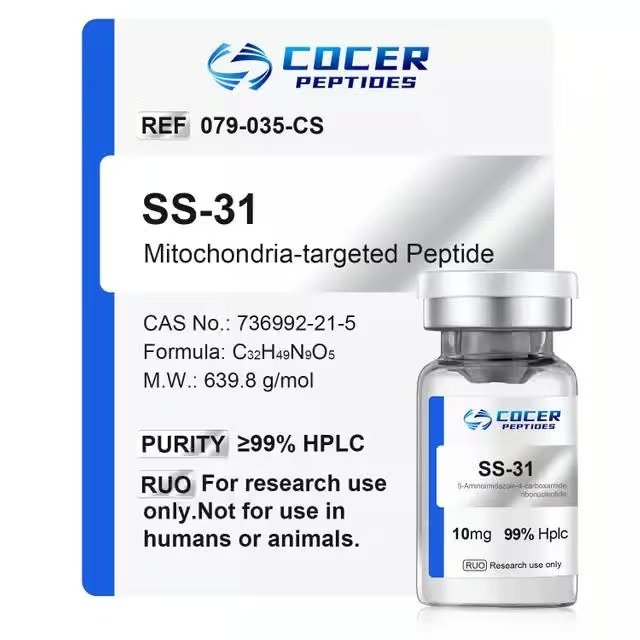
SS-31 10mg
Price range: £47.00 through £125.00
🧬 SS-31 Peptide – 10mg
-
🔬 Mitochondria-targeted tetrapeptide (elamipretide)
-
✅ ≥99% purity, HPLC tested
-
📦 10mg vial for laboratory research
-
💧 Free bacteriostatic water with every order
-
🧪 For research use only
Order now – premium SS-31 peptide for UK labs! 🚀
15% DISCOUNT ON CHECKOUT WITH CRYPTO
- Satisfaction Guaranteed
- No Hassle Refunds
- Secure Payments
Description
Premium SS-31 Peptide – 10mg Research Grade
Product Overview
This mitochondria-targeted tetrapeptide, also known as elamipretide or MTP-131, has the sequence D-Arg-Dmt-Lys-Phe-NH2. It was co-discovered by Dr. Peter W. Schiller at the Montreal Clinical Research Institute (IRCM) and Dr. Hazel Szeto at Cornell University, representing a landmark achievement in mitochondrial medicine. On September 19, 2025, the FDA approved elamipretide (brand name Forzinity) as the first treatment for Barth syndrome, making it the first approved mitochondria-targeted therapeutic in history.
Researchers investigating SS-31 peptide focus on its unique mechanism of action. Due to its alternating aromatic and cationic residues, the molecule readily penetrates cell membranes and concentrates specifically in the inner mitochondrial membrane. This selective targeting distinguishes SS 31 peptide from conventional antioxidants that lack mitochondrial specificity.
This 10mg research-grade vial is supplied as a lyophilized powder for laboratory investigation of mitochondrial function, oxidative stress pathways, and cellular bioenergetics. According to research published in the Journal of the American Society of Nephrology, the compound exerts its mitoprotective effects through binding phospholipid scramblase 3 (PLSCR3), an inner mitochondrial membrane protein.
Important Notice: This product is supplied strictly for research purposes only and is not intended for human or veterinary use. Health Canada has warned consumers against using unapproved injectable peptide products, including SS-31, noting risks of contamination, incorrect dosing, and unknown safety profiles.
Product Specifications
| Feature | Specification |
|---|---|
| Peptide Name | SS-31 (Elamipretide, MTP-131) |
| Amino Acid Sequence | D-Arg-Dmt-Lys-Phe-NH2 |
| Molecular Formula | C32H49N9O5 |
| Molecular Weight | 639.79 Da |
| CAS Number | 736992-21-5 |
| Purity | ≥99% (HPLC) |
| Form | Lyophilized powder |
| Vial Size | 10mg |
| Storage | -20°C (long-term), protected from light |
| For Research Use Only | Not for human or veterinary use |
Mechanism of Action
Cardiolipin Binding and Membrane Stabilisation
SS-31 peptide targets the inner mitochondrial membrane primarily by binding cardiolipin, a phospholipid critical for mitochondrial function. This cardiolipin association has been shown to normalise the structure of the inner mitochondrial membrane, thereby improving mitochondrial function and ATP production. Research published in RSC Advances confirms that the compound stabilises cardiolipin and maintains mitochondrial membrane integrity.
PLSCR3 Interaction
A genome-wide CRISPR screen published in the Journal of the American Society of Nephrology identified phospholipid scramblase 3 (PLSCR3) as the essential biological target mediating the protective effects of SS-31 peptide. Biochemical studies demonstrated that it directly binds to a previously uncharacterised N-terminal domain of PLSCR3 and stimulates its scramblase activity. This discovery provides mechanistic support for the observed mitoprotective properties.
Oxidative Stress Reduction
SS 31 peptide reduces formation of pathogenic reactive oxygen species (ROS) levels while improving electron transport chain function. Research demonstrates that it increases mitochondrial respiration and ATP production, interrupting and potentially reversing damaging oxidative stress. Studies indexed in PubMed have shown that the compound reduces pyroptosis and improves functional recovery in preclinical models.
Research Applications
Neuroprotection and Spinal Cord Injury Research
Research published in ScienceDirect evaluated SS-31 peptide in a mouse model of contusive spinal cord injury. The study demonstrated that it improved locomotor recovery and gait coordination, with higher BMS scores and prolonged latency to fall in rotarod testing. These improvements were accompanied by reduced lesion burden and greater neuronal preservation at 28 days post-injury. The authors concluded that the compound preserves mitochondrial bioenergetics and facilitates neural remodeling after spinal cord injury.
Cardiovascular Research
SS-31 peptide has been studied extensively in cardiovascular models. Research from Nature Reviews Nephrology demonstrated that treatment with the compound prevented high-fat diet-induced lipid accumulation and mitochondrial damage in renal cells. The study found that it abolished cell death and glomerular and tubular injury while restoring renal AMP kinase signalling. According to the authors, the compound was well-tolerated in phase I and II clinical trials, supporting further investigation.
Aging and Cerebral Vasculature Research
A proteomic study published in GeroScience investigated SS 31 peptide in aged mice, examining its effects on brain microvessels. The study identified 6,267 proteins in cortical microvessels, of which 12% were mitochondria-associated. Administration of the compound affected 107 significantly differentially expressed proteins associated with oxidative phosphorylation, metabolism, antioxidant defence, and mitochondrial dynamics. The findings suggest that it may have rejuvenating actions in the aging brain.
Skin Photodamage Research
Research published in ScienceDirect developed a novel strategy using milk-derived exosomes loaded with SS-31 peptide (Exo-SS31) to mitigate UV-induced photodamage. The study demonstrated that Exo-SS31 reduced UV-induced oxidative stress, lowered ROS levels, and boosted antioxidant enzyme activity. The complex inhibited MMP-1/3 expression and prevented collagen degradation, suggesting potential applications in dermatological research.
Barth Syndrome Clinical Translation
The clinical development of SS-31 peptide culminated in FDA approval for Barth syndrome in September 2025. The FDA documentation notes that patients receiving the compound under expanded access showed significantly improved muscle strength and quality of life. The approval represents the first mitochondria-targeted therapeutic to receive FDA approval, validating decades of preclinical research.
Quality and Purity
Each batch of Cocer Peptides SS-31 peptide undergoes rigorous quality control:
-
≥99% purity verified by HPLC
-
Mass spectrometry identity confirmation
-
Batch/lot number matching the vial label
-
Certificate of Analysis (COA) available on request
As noted in the FDA documentation for elamipretide, rigorous analytical characterisation is essential for research-grade peptides intended for laboratory investigation. Independent testing has revealed that approximately 30% of sampled peptide products from unregulated sources may have mislabelling, dosing errors, or contamination issues.
The Medicines and Healthcare products Regulatory Agency (MHRA) has warned against purchasing unlicensed medicines and research peptides online. Health Canada has similarly cautioned that unapproved peptide products may contain contaminants including heavy metals, microbial agents, or undeclared ingredients.
Frequently Asked Questions
What is SS-31 peptide?
SS-31 peptide (elamipretide, MTP-131) is a synthetic mitochondria-targeted tetrapeptide with the sequence D-Arg-Dmt-Lys-Phe-NH2. It was co-discovered by researchers at the IRCM and Cornell University and received FDA approval for Barth syndrome in September 2025.
What makes SS 31 peptide unique among antioxidants?
Unlike conventional antioxidants that lack mitochondrial specificity, SS 31 peptide selectively targets the inner mitochondrial membrane by binding cardiolipin. This targeted mechanism allows it to stabilise mitochondrial structure, improve ATP production, and reduce pathogenic ROS levels.
What research applications is SS-31 peptide used for?
SS-31 peptide is studied in neuroprotection, spinal cord injury, cardiovascular research, aging and cerebral vasculature studies, skin photodamage research, and mitochondrial disease models.
What purity level can I expect?
Our SS-31 peptide is provided at ≥99% purity, verified by HPLC with third-party testing.
How should SS-31 peptide be stored?
Store lyophilized powder at -20°C for long-term stability, protected from light. Reconstituted material should be stored at 2–8°C and used promptly following standard laboratory protocols.
Is this product suitable for human use?
No. This product is supplied strictly for research purposes only and is not intended for human or veterinary use. Health Canada has warned against using unapproved injectable peptide products due to risks including hormonal imbalances, blood clots, and contamination.
Conclusion
SS-31 peptide represents a landmark achievement in mitochondrial research, with its FDA approval for Barth syndrome in 2025 validating decades of scientific investigation. For UK laboratories sourcing SS-31 peptide for research applications, this 10mg presentation offers documented composition, ≥99% purity, and batch-specific COA support. The established pharmacology—including cardiolipin binding, PLSCR3 interaction, and oxidative stress reduction—provides a strong foundation for meaningful scientific inquiry across multiple research disciplines.
Ready to Advance Your Research?
Order premium SS-31 peptide (10mg) for your laboratory today.
Additional information
| mg | 10mg, 30mg, 50mg |
|---|
Related products
-
Sale!
Retatrutide
Price range: £65.00 through £250.00Select options This product has multiple variants. The options may be chosen on the product page -
Sale!
-
Sale!
-
Sale!
Reviews
There are no reviews yet.