
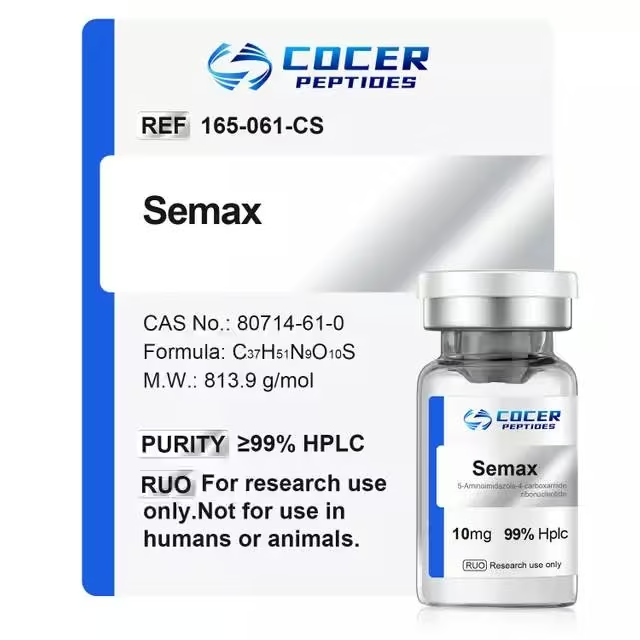
Semax 10mg
Original price was: £45.00.£35.00Current price is: £35.00.
Sema, a synthetic ACTH analog, offers cognitive enhancement and neuroprotection. It boosts attention, memory, and learning, aids neurorepair, and improves stress adaptation. Sema also shows promise for depression, anxiety, cerebrovascular diseases, Alzheimer’s, and cerebral infarction. Its antioxidant, anti-inflammatory, and immunomodulatory actions contribute to its benefits for both healthy individuals and patients. It will be provided as lyophilized powder for stability.
Description
Semax 10mg – Research-Grade Heptapeptide for Neuroplasticity Studies
Cocer Peptides is proud to offer Semax 10mg, a high-purity research-grade heptapeptide with the amino acid sequence Met-Glu-His-Phe-Pro-Gly-Pro (MEHFPGP).
With a molecular formula of C₃₇H₅₁N₉O₁₀S and a molecular weight of 813.93 g/mol, this synthetic peptide represents a significant tool for researchers investigating neuroplasticity, cognitive function, and neuroprotective mechanisms.
This compound is a synthetic analogue of the N-terminal fragment (4-10) of adrenocorticotropic hormone (ACTH), developed as a regulatory peptide with pronounced nootropic and neuroprotective properties.
⚠️ Important Notice: This product is supplied for laboratory research use only. It is not intended for human or veterinary consumption and must not be used in clinical or therapeutic applications.
As a research peptide, this compound provides scientists with a reliable tool for investigating BDNF signalling pathways, neurotrophic factor modulation, and the molecular mechanisms underlying cognitive function and neural resilience.
The compound is of particular interest to researchers studying neuroplasticity, stress-responsive signalling, and the effects of regulatory peptides on gene expression in neural tissues.
The National Institutes of Health maintains extensive databases on peptide research, and investigations into this compound continue to expand our understanding of neuropeptide signalling.
Research published in peer-reviewed journals and documented in the PubMed database has explored the biochemical properties and potential research applications of this peptide.
The Google Scholar database provides access to thousands of citations on peptide bioregulation and neuroscience research.
Meanwhile, ScienceDirect and ResearchGate offer additional resources for researchers exploring neuroactive peptides.
What Is Semax 10mg?
This compound is a synthetic heptapeptide bioregulator consisting of seven amino acids: methionine, glutamic acid, histidine, phenylalanine, proline, glycine, and proline (MEHFPGP).
It was developed as an analogue of ACTH (4-10), designed to retain the neurotropic properties of the parent molecule while eliminating hormonal activity.
The peptide has been extensively studied for its ability to modulate neurotrophic signalling, particularly through increasing levels of brain-derived neurotrophic factor (BDNF) in the basal forebrain.
Structure and Composition:
| Property | Specification |
|---|---|
| Product Name | Semax 10mg |
| Molecular Formula | C₃₇H₅₁N₉O₁₀S |
| Molecular Weight | 813.93 g/mol |
| Sequence | Met-Glu-His-Phe-Pro-Gly-Pro (MEHFPGP) |
| CAS Number | 80714-61-0 |
| Purity | ≥98% (HPLC verified) |
| Research Area | Neuroscience, Neuroplasticity |
Research has demonstrated that this compound exhibits multi-faceted biological activity, including neurotrophic, neuroprotective, and cognitive-enhancing properties.
The peptide is manufactured as a lyophilised solid, a drying process that preserves structural integrity and ensures stability during storage.
This form allows researchers to reconstitute the compound at desired concentrations for specific assay requirements.
Chemical and Structural Properties
Molecular Characteristics
| Property | Specification |
|---|---|
| Product Name | Semax 10mg |
| Molecular Formula | C₃₇H₅₁N₉O₁₀S |
| Molecular Weight | 813.93 g/mol |
| Sequence | Met-Glu-His-Phe-Pro-Gly-Pro (MEHFPGP) |
| CAS Number | 80714-61-0 |
| Purity | ≥98% (HPLC verified) |
| Form | Lyophilised Solid |
| Research Area | Neuroscience, Neuroplasticity |
The heptapeptide sequence MEHFPGP provides this compound with its specific biological activity.
Research has shown that this peptide binds specifically to cell membranes in the basal forebrain, with binding characterised as time-dependent, specific, and reversible.
The molecular weight of 813.93 g/mol positions it within the class of short peptides capable of efficient cellular interaction and signalling.
The presence of proline residues within the sequence contributes to structural stability and resistance to rapid enzymatic degradation in research environments.
These structural properties—accessible via the NIH chemical database—enable this compound to function as a bio-regulatory peptide that can modulate transcriptional activity in neural cells.
Purity and Quality Standards
This compound is manufactured to meet research-grade specifications with a guaranteed purity of ≥98% verified by High-Performance Liquid Chromatography (HPLC).
This level of purity is essential for research applications where contaminant interference could compromise experimental validity.
Independent batch testing is conducted to verify:
-
Peptide identity and sequence confirmation
-
Purity verification via HPLC
-
Residual solvent analysis
-
Endotoxin testing (where applicable)
Researchers can access the Certificate of Analysis (COA) for each batch, providing full transparency on product quality and testing parameters.
Research Applications
Neurotrophic Signalling and BDNF Modulation
The primary research interest in this compound centres on BDNF signalling and neurotrophic modulation.
Research published in European Journal of Neuroscience and indexed on PubMed demonstrated that this peptide applied intranasally at specific concentrations resulted in a rapid increase in BDNF protein levels after 3 hours in the basal forebrain.
Studies have shown that it stimulates the synthesis of brain-derived neurotrophic factor (BDNF), a potent modulator of synaptic plasticity, in astrocytes cultured from rat basal forebrain.
Investigations purport that this compound may interact with intracellular cascades linked to CREB (cAMP response element-binding protein), a transcription factor known to play a role in neural plasticity and memory-associated processes.
This BDNF-mediated mechanism is theorised to contribute to the peptide’s effects on cognitive coordination and information processing.
Neuroprotection and Ischemic Stroke Research
This compound has demonstrated significant neuroprotective properties in various research models.
Using a transient middle cerebral artery occlusion (tMCAO) model in rats, researchers investigated its effects on gene expression following ischemic stroke.
RNA-Seq analysis revealed that this peptide can partially prevent changes in immune- and neurosignalling-related gene expression profiles disturbed by ischemia at 4.5 hours after tMCAO.
This research gives insight into how the compound modulates the transcriptome during the therapeutic window for stroke intervention.
The peptide is actively used as a neuroprotective agent in clinical settings in some regions, making it a valuable tool for translational research.
Alzheimer’s Disease and Amyloid Research
This compound has been investigated in the context of Alzheimer’s disease research and amyloid pathology.
Research published in ACS Chemical Neuroscience and indexed on ScienceDirect demonstrated that this peptide is able to prevent the formation of Aβ:Cu²⁺ complexes.
It exhibited anti-aggregating and protective properties, inhibiting fibre formation by interfering with the fibrillogenesis of Aβ:Cu²⁺ complexes.
This study suggests that this compound could modulate the Aβ fibre formation process, making it a promising candidate for Alzheimer’s disease research.
In transgenic APPswe/PS1dE9/Blg mice modelling Alzheimer’s disease, the peptide improved cognitive functions in open field, novel object recognition, and Barnes maze tests.
Histological examination showed that it reduced the number of amyloid inclusions in the cortex and hippocampus of the animals’ brains.
These findings demonstrate the high potential of this compound for developing therapeutic strategies for Alzheimer’s disease.
Cognitive Coordination and Information Processing
Within experimental research contexts, this compound has been examined for its potential relationship with cognitive signalling domains such as attention regulation, learning dynamics, and memory-associated processes.
Research indicates that it may influence synaptic communication efficiency, potentially by modulating neurotransmitter systems linked to glutamatergic and monoaminergic signalling.
It has been hypothesised that this peptide may support the synchronisation of signalling between cortical and subcortical regions, influencing how information is processed, retained, and retrieved.
Binding studies have revealed specific binding sites in the rat basal forebrain, with a dissociation constant (KD) of 2.4±1.0 nM.
These findings indicate that the cognitive effects exerted by this compound might be associated, at least in part, with increased BDNF protein levels in this brain region.
Stress-Responsive and Neuroimmune Signalling
Another domain in which this compound has generated research interest involves stress-related signalling systems and neuroimmune communication.
Given its structural lineage from ACTH fragments, researchers have explored the possibility that it may interact with neuroendocrine stress axes without engaging in classical hormonal outputs.
Research suggests that this peptide may influence stress-responsive gene expression patterns and neuromodulatory balance.
Emerging research discourse also considers this compound within the context of neuroimmune interaction, with investigations suggesting the peptide may influence signalling molecules involved in inflammatory regulation.
Copper-Induced Amyloid Aggregation Research
This compound has been studied for its ability to affect copper-induced Aβ aggregation in artificial membrane models.
It is known to form a stable complex with Cu²⁺ ions and has been proven to have neuroprotective and nootropic properties.
Through a combination of spectrofluorometric, calorimetric, and MTT assays, researchers demonstrated that this peptide can prevent the formation of Aβ:Cu²⁺ complexes.
It showed concentration-dependent anti-aggregating properties, with higher t_lag and t_1/2 values and decreased I_max when present.
Gene Expression and Transcriptional Modulation
This compound has been investigated for its effects on gene expression and transcriptional modulation.
RNA-Seq analysis revealed that it modulates the expression of hundreds of ischemia-related differentially expressed genes in the dorsolateral areas of the frontal cortex of rats.
This study gives insight into how the transcriptome depends on variations in the structure of related peptides.
The peptide’s ability to modulate gene expression makes it a valuable research tool for investigating neuroprotective mechanisms at the molecular level.
Technical Specifications
| Specification | Detail |
|---|---|
| Product Name | Semax 10mg |
| Molecular Weight | 813.93 g/mol |
| Molecular Formula | C₃₇H₅₁N₉O₁₀S |
| Sequence | Met-Glu-His-Phe-Pro-Gly-Pro (MEHFPGP) |
| CAS Number | 80714-61-0 |
| Purity | ≥98% (HPLC) |
| Form | Lyophilised Solid |
| Research Areas | Neuroscience, Neuroplasticity |
| Storage | 2–8°C |
Reconstitution and Handling Protocol
Recommended Storage Conditions
This compound is supplied as a lyophilised solid and should be stored at 2–8°C to maintain stability and potency.
Proper temperature control prevents degradation and preserves the peptide’s structural integrity.
-
Short-term storage: 2–8°C (refrigeration)
-
Long-term storage: -20°C or below (freezer)
-
Protect from light: Store in original packaging or dark conditions
-
Do not freeze: After reconstitution, avoid repeated freeze-thaw cycles
Reconstitution Guidelines
For best results in a research setting, allow both the peptide and chosen solvent to reach ambient laboratory temperature before reconstitution.
This helps maintain structural integrity during dissolution.
Standard reconstitution protocol:
-
Bring lyophilised peptide and solvent to room temperature
-
Add the appropriate volume of sterile solvent (water for injection, PBS, or bacteriostatic water)
-
Gently swirl—do not vortex or shake vigorously
-
Allow to fully dissolve before use
-
Use within the recommended timeframe
Dissolved solutions should be aliquoted and stored at -20°C to avoid repeated freeze-thaw cycles, and are best used fresh after preparation.
Quality Assurance and Testing
Cocer Peptides is committed to providing research-grade compounds that meet the highest standards of quality and consistency.
Each batch undergoes rigorous testing to verify:
-
Identity confirmation: Mass spectrometry verification
-
Purity analysis: HPLC with ≥98% purity threshold
-
Content uniformity: Consistency across vials
-
Residual solvent analysis: Within acceptable limits
Independent third-party testing is conducted to ensure unbiased verification.
Researchers can view the Certificate of Analysis for their specific batch directly on our site, providing full transparency and traceability.
Frequently Asked Questions (FAQ)
What is Semax 10mg?
This compound is a synthetic heptapeptide bioregulator composed of methionine, glutamic acid, histidine, phenylalanine, proline, glycine, and proline (MEHFPGP).
It is a research peptide designed to modulate neurotrophic signalling and cognitive function through BDNF-related mechanisms.
Comprehensive research on neuroactive peptides is available through PubMed and Google Scholar.
What is the purity of Semax 10mg?
This compound is guaranteed to have a purity of ≥98% verified by HPLC testing.
Each batch is independently tested to ensure quality and consistency.
How should Semax 10mg be stored?
This compound should be stored at 2–8°C as a lyophilised solid.
After reconstitution, it should be refrigerated and used within the recommended timeframe to maintain stability.
What research applications is Semax 10mg used for?
This compound is used in research exploring BDNF signalling, neuroprotection, Alzheimer’s disease, cognitive function, stress-responsive signalling, neuroimmune communication, copper-induced amyloid aggregation, and gene expression modulation.
For a comprehensive overview of peptide research applications, researchers are encouraged to explore the PubMed database.
ScienceDirect and ResearchGate offer additional resources for researchers exploring neuroactive peptides.
How should I reconstitute Semax 10mg?
Allow both the peptide and solvent to reach room temperature before reconstitution.
Add the appropriate volume of sterile solvent and gently swirl to dissolve.
Do not vortex or shake vigorously.
Is Semax 10mg approved for human use?
No. This compound is strictly for laboratory research use only and is not approved for human or veterinary use as a research product.
This product must not be used in clinical or therapeutic applications.
Conclusion
Semax 10mg (Met-Glu-His-Phe-Pro-Gly-Pro) represents a powerful research tool for scientists investigating neuroplasticity, neuroprotection, and the molecular mechanisms underlying cognitive function.
With a molecular weight of 813.93 g/mol and guaranteed purity of ≥98%, this compound offers the consistency and reliability required for reproducible research outcomes.
The peptide’s demonstrated effects in BDNF modulation, neuroprotection, Alzheimer’s disease models, and gene expression regulation make it a versatile tool for neuroscience research.
Research published in peer-reviewed journals and documented in the PubMed database has explored the biochemical properties and potential research applications of this peptide.
The Google Scholar database provides access to thousands of citations on peptide bioregulation and neuroscience research.
Meanwhile, ScienceDirect and ResearchGate offer additional resources for researchers exploring neuroactive peptides.
As with all research peptides, this compound is intended for laboratory use only and should be handled according to established protocols for peptide-based research.
Cocer Peptides is proud to provide UK researchers with access to high-quality, independently tested research compounds.
Related Research Products
-
Bioregulator Peptides – View our complete bioregulator collection
-
Certificate of Analysis – Access batch-specific COA data
-
Research Peptides – Explore our full peptide catalogue
-
Reconstitution Guide – Comprehensive handling protocols
-
Contact Us – For research support and enquiries
Disclaimer: This product is supplied for laboratory research use only. It is not intended for human or veterinary use and must not be used in any medical, therapeutic, or clinical applications. The information provided is for educational and research purposes only. Always follow standard laboratory safety protocols when handling research compounds.
Reviews
There are no reviews yet.