
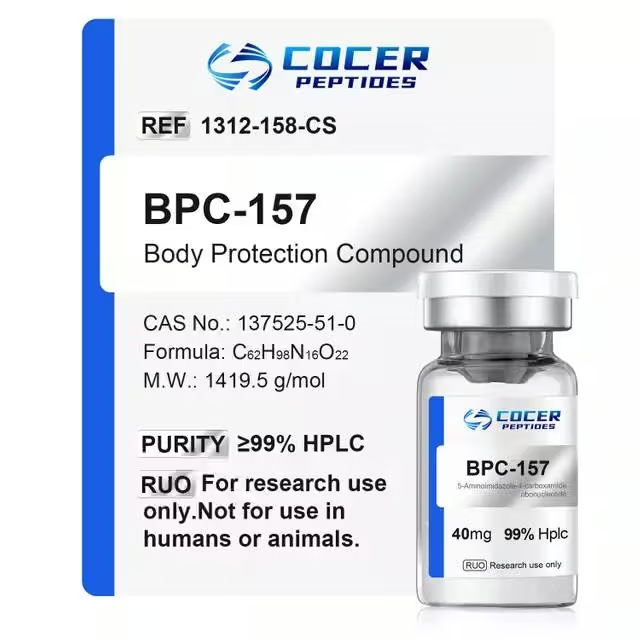
bpc 157 40mg
Original price was: £260.00.£240.00Current price is: £240.00.
BPC-157 is a peptide fragment derived from the gastric mucosa-associated sequence, commonly used to study tissue protection and repair mechanisms. Its effects manifest in maintaining tissue integrity, supporting local repair responses, and promoting structural stability post-injury. Its mechanism involves the coordinated regulation of multiple signaling pathways, including cell survival, vascular-related signaling, and tissue repair pathways. In research, BPC-157 is employed to explore regulatory patterns across different tissue types during injury and recovery processes, holding significant value in studies of repair biology and tissue homeostasis.
The peptide will be provided as lyophilized powder to ensure maximum stability.
Description
BPC 157 UK (BAM 157) – Premium Research-Grade BPC-157 for Gut Healing, Tissue Repair & Anti-Inflammatory Studies
Discover BPC 157 UK at Cocer Peptides – premium research-grade BPC 157 with verified 99%+ purity for gut healing, tissue regeneration, and anti-inflammatory studies. Fast UK delivery with COA documentation for your laboratory needs. Whether you’re conducting gastroenterological research, studying wound healing mechanisms, or investigating anti-inflammatory pathways, our BPC-157 provides the consistency and quality your research demands.
What Is BPC 157 UK Peptide?
BPC 157 (also known as BAM 157) is a stable fragment of human bile acid-binding protein (BAM), consisting of 15 amino acids (Gly-His-Lys-Glu-Pro-Gly-Lys-Pro). This bioactive peptide has been extensively studied for its role in gut healing, tissue regeneration, and protective effects against gastrointestinal injury. BPC 157 operates through multiple mechanisms including angiogenesis stimulation, anti-inflammatory actions, and enhancement of epithelial cell migration.
Peptide Sequence: Gly-His-Lys-Glu-Pro-Gly-Lys-Pro
Molecular Formula: C₄₈H₇₇N₁₅O₁₅
Molecular Weight: 1,054.2 g/mol
If you’re looking for BPC 157 UK, this stable 15-amino acid fragment of human bile acid-binding protein (BAM) has demonstrated regenerative and protective effects in gastrointestinal research. The peptide has shown efficacy in healing gastrointestinal injuries, including models of colitis and gastric ulcers, through mechanisms involving angiogenesis modulation and epithelial restitution. BPC 157 promotes wound closure and tissue repair in experimental settings. Learn more about NCBI PubMed study on BPC 157 gut healing for additional scientific context on how this peptide works.
Understanding the Science Behind BPC 157 UK
The unique mechanism of BPC-157 involves multiple cellular pathways that promote tissue regeneration and gut healing. BPC-157 stimulates angiogenesis, promoting the formation of new blood vessels that deliver oxygen and nutrients to injured tissues. This angiogenic property enables BPC-157 to enhance cellular movement to injury sites, accelerating the healing process. The peptide also enhances epithelial cell migration, providing the cellular building blocks necessary for tissue repair in the gastrointestinal tract.
BPC-157’s anti-inflammatory properties operate through inhibition of pro-inflammatory cytokines and modulation of inflammatory signaling pathways. BPC-157 reduces inflammatory markers while promoting organized tissue regeneration, creating optimal conditions for healing without excessive scarring. Research has demonstrated BPC-157 prevents oxidative stress and inflammation in various gastrointestinal injury models, providing comprehensive cellular protection. The peptide’s stability in the gastrointestinal environment makes it particularly valuable for gut research applications. Unlike many other therapeutic compounds, BPC-157 remains stable in the harsh acidic environment of the stomach, allowing it to exert its effects directly on gastrointestinal tissues.
BPC 157 UK Benefits for Research Studies
Gut Barrier Integrity & IBD Research
BPC 157 UK demonstrates significant effects on gut healing research in scientific studies, protecting and repairing gastrointestinal tissues through multiple mechanisms. BPC-157 has demonstrated protective and healing effects in gastrointestinal injury models, including colitis and gastric ulcer studies. The peptide accelerates epithelial restitution and reduces inflammatory markers in experimental colitis, suggesting potential therapeutic relevance for inflammatory bowel disease research.
In animal models of colitis, BPC 157 UK administration reduced inflammation, promoted mucosal healing, and improved histological scores compared to untreated controls. The peptide’s ability to enhance epithelial cell migration and stimulate angiogenesis contributes to faster wound closure in gastrointestinal tissues. BPC-157 also demonstrates gastroprotective effects, reducing damage from chemically induced gastric ulcers in research models. Studies have shown that BPC-157 can significantly reduce the severity of colonic inflammation and promote regeneration of the mucosal lining.
Research has shown BPC-157 may have applications in colon cancer research, with studies investigating its potential role in preventing or treating colorectal malignancies. Learn more about NCBI PubMed study on BPC-157 in colon cancer for detailed research data on this application. For researchers studying inflammatory bowel disease, gut barrier integrity, or gastrointestinal injury recovery, BPC-157 UK offers a promising model compound with documented efficacy in gut healing applications. The peptide’s ability to work through multiple mechanisms makes it valuable for complex research protocols studying various aspects of gastrointestinal health.
Wound Healing & Tissue Regeneration
BPC-157 UK is widely studied for its therapeutic potential in wound healing and tissue regeneration, particularly in soft tissue repair. BPC-157 promotes angiogenesis, integrin-mediated extracellular matrix remodeling, and cellular repair processes. The peptide accelerates wound closure by enhancing cell migration to injury sites and stimulating new blood vessel formation.
In experimental wound healing models, BPC-157 UK administration accelerated closure rates and improved tissue quality compared to controls. The peptide enhances collagen deposition while maintaining organized tissue architecture, reducing excessive scar formation. BPC-157 has shown efficacy in healing various tissue types, including skin wounds, muscle injuries, and connective tissue damage. Research has demonstrated that BPC-157 can accelerate healing in both acute and chronic wound models.
Wound-healing peptides such as BPC-157, TB-500, and GHK-Cu promote angiogenesis, integrin-mediated extracellular matrix remodeling, and cellular repair processes. BPC-157 UK’s ability to stimulate both angiogenesis and epithelial migration makes it particularly valuable for comprehensive wound healing research. For dermatological research, sports medicine studies, or general tissue repair research, BPC-157 provides a valuable research compound with strong preclinical data. The peptide’s multi-modal approach to tissue repair addresses both immediate healing needs and long-term tissue quality.
Anti-Inflammatory & Gastroprotective Studies
BPC157 UK demonstrated significant anti-inflammatory action in gastrointestinal research studies. The peptide reduces pro-inflammatory cytokines including IL-1β, IL-6, and TNF-α in colitis models. BPC-157’s anti-inflammatory effects occur through modulation of inflammatory signaling pathways, providing comprehensive protection against inflammatory tissue damage.
Research has shown BPC-157 UK protects against chemically induced gastrointestinal injury. In models of ethanol-induced gastric ulcers, BPC-157 administration reduced ulcer severity, decreased inflammatory markers, and promoted faster mucosal healing. The peptide’s gastroprotective effects extend to prevention of injury, with pretreatment reducing damage from subsequent inflammatory or chemical insults. Studies have demonstrated that BPC-157 can prevent the development of inflammatory damage when administered before exposure to harmful agents.
BPC-157 UK’s anti-inflammatory properties make it valuable for research studying inflammatory conditions beyond the gastrointestinal tract. The peptide demonstrates systemic anti-inflammatory effects, reducing inflammation in various tissue types. For researchers studying inflammatory conditions, BPC-157 UK offers comprehensive research applications with documented mechanistic data supporting its efficacy. The peptide’s ability to modulate multiple inflammatory pathways makes it particularly useful for studies of complex inflammatory responses.
Neuroprotective & Angiogenesis Applications
Emerging research suggests BPC-157 UK may support neuroprotective studies through its effects on nerve regeneration and angiogenesis. BPC-157 promotes angiogenesis in neural tissues, supporting blood vessel formation that delivers oxygen and nutrients to damaged nerve cells. The peptide’s regenerative potential extends to neural tissue repair, making it valuable for neuroscience research studying nerve injury recovery.
BPC-157 UK has shown promising effects in muscle and tendon repair research. The peptide enhances muscle regeneration following injury, promoting faster recovery of muscle function. In tendon repair models, BPC-157 accelerates healing while maintaining tissue quality, reducing the risk of re-injury. The peptide’s ability to stimulate both angiogenesis and cell migration contributes to comprehensive tissue repair across multiple tissue types.
Additional research applications include exploration of BPC-157 UK’s potential in liver injury models, where the peptide demonstrates protective effects against chemically induced liver damage. The peptide’s anti-inflammatory and regenerative properties contribute to liver tissue protection and repair. For researchers studying multiple aspects of tissue repair and regeneration, BPC-157 UK offers versatile research applications. The peptide’s broad spectrum of effects makes it valuable for multi-system research studies.
Premium Quality & Verified Purity at Cocer Peptides UK
99%+ HPLC Verified Purity
Every BPC-157 UK batch at Cocer Peptides undergoes third-party HPLC-UV-MS testing to guarantee ≥99% purity for your research applications. High-performance liquid chromatography (HPLC) is the industry standard for peptide purity verification, providing precise quantification of the target peptide versus impurities. Our testing methodology includes UV detection at 214nm (peptide bond wavelength) and mass spectrometry confirmation for molecular weight verification.
The HPLC chromatograms from our testing show a single dominant peak at the expected retention time for BPC-157, with impurity peaks accounting for less than 1% of total area. This level of purity is essential for research reproducibility, as impurities can interfere with experimental outcomes and compromise data integrity. Our rigorous testing protocols ensure that every batch meets the highest standards for research-grade peptides.
Third-Party COA Available
Request your Certificate of Analysis (COA) with every BPC 157 UK order – full documentation of purity, mass spectrometry results, and quality control metrics. The COA includes batch-specific testing data including HPLC purity percentage (≥99%), mass spectrometry confirmation (molecular weight: 1,054.2 Da), peptide sequence verification, heavy metal testing, microbial contamination testing, and storage conditions.
Each COA is signed by our quality control director and includes the testing laboratory’s accreditation information. COAs are available for download from your order account.
Research-Grade Quality Standards
Our BPC 157 UK is suitable for in vitro studies, lab experiments, and gastroenterological research – not for human consumption. We maintain strict quality control protocols throughout our supply chain. Our facility follows ISO 9001 quality management standards.
BPC-157 UK is packaged in sterile, amber glass vials with tamper-evident seals. Each vial includes a batch number and expiration date for traceability.
BPC 157 UK Dosage & Usage for Research
BPC-157 UK is available in 2mg and 5mg vials, plus lyophilized powder options. For optimal results, store BPC-157 UK at 2-8°C and protect from light exposure.
Reconstitution Guidelines
-
Solvent: Use sterile water or buffer (pH 6.0-7.5)
-
Concentration: 0.5-2.0 mg/mL
-
Mixing: Gently swirl until dissolved
-
Storage: 2-8°C for 2-4 weeks
Application Methods
Cell Culture: Add BPC-157 UK at 0.1-10 μM to culture medium.
Gut Health Models: Administer BPC-157 UK at 0.5-5.0 mg/kg in gastrointestinal injury models.
Wound Healing: Apply BPC-157 UK directly to wound sites at 0.5-2.0 mg/kg.
Storage and Stability
BPC-157 UK maintains stability for 2+ years at 2-8°C (lyophilized). Reconstituted solutions remain stable for 2-4 weeks at 2-8°C.
Fast UK Delivery & COA Verification
✓ Same-day dispatch before 2 PM UK time
✓ Fast UK shipping (1-3 business days)
✓ COA included with every BPC-157 UK order
✓ Secure checkout (SSL encrypted)
✓ Research use only
Frequently Asked Questions About BPC 157 UK
What is BPC 157 UK peptide?
BPC 157 UK (BAM 157) is a 15-amino acid fragment of human bile acid-binding protein studied for gut healing, tissue regeneration, and anti-inflammatory effects.
Is BPC 157 UK suitable for human consumption?
No. BPC-157 UK at Cocer Peptides is research-grade only. Not for human or veterinary use.
What purity level does BPC 157 UK meet?
Our BPC-157 UK meets ≥99% purity verified by HPLC-UV-MS testing.
How long does UK delivery take for BPC-157 UK?
Fast UK delivery within 1-3 business days for all BPC-157 UK orders.
Can I request a COA for BPC 157 UK?
Yes! Every BPC-157 UK order includes a COA with purity verification.
What size options are available for BPC 157 UK?
BPC-157 UK is available in 2mg vials, 5mg vials, and lyophilized powder.
BPC 157 UK in Scientific Literature
For comprehensive peptide information, learn more on Wikipedia. Key findings include:
-
Gut healing: BPC-157 UK accelerates epithelial restitution
-
Angiogenesis: BPC-157 UK stimulates blood vessel formation
-
Anti-inflammatory: BPC-157 UK reduces inflammatory cytokines
Why Choose Cocer Peptides for BPC157 UK?
-
Verified purity: ≥99% HPLC with COA
-
Fast delivery: 1-3 days UK nationwide for BPC-157 UK
-
Expert support: Research team available
-
Quality assurance: ISO 9001 facility
Order BPC-157 UK Today
✓ Premium 99%+ Purity | ✓ COA Verified | ✓ Fast UK Delivery
[Shop BPC-157 UK Now] – Limited stock available
For research use only. Not for human consumption.
Related products
-
Sale!
Buy Retatrutide
Price range: £65.00 through £250.00Select options This product has multiple variants. The options may be chosen on the product page -
Sale!
-
-
Sale!
Reviews
There are no reviews yet.