
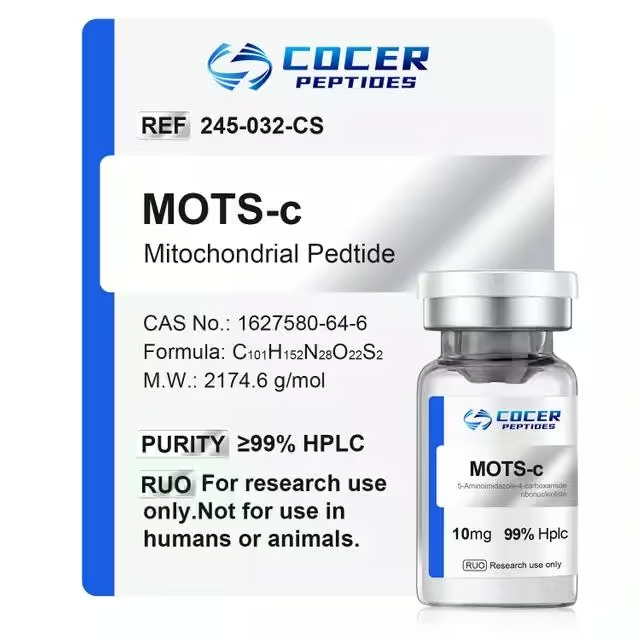
MOTS-c
Price range: £55.00 through £255.00
Description
H1: MOTS-c Peptide UK: Premium Mitochondrial-Derived Peptide for Metabolic & Longevity Research
MOTS-c, short for Mitochondrial Open Reading Frame of the 12S rRNA type-c, is a 16-amino acid peptide encoded directly in the mitochondrial genome. This mitochondrial-derived peptide has emerged as a powerful subject in research focused on metabolic regulation, insulin sensitivity, exercise performance, and healthy ageing. At Cocer Peptides UK, we supply high-purity MOTS-c specifically formulated for laboratory and scientific research across the United Kingdom. Our MOTS-c peptide is independently HPLC-tested to exceed 99% purity, with full batch-specific Certificates of Analysis (COA) provided for complete transparency and reproducibility.
Researchers exploring mitochondrial signalling, energy homeostasis, metabolic disorders, and longevity pathways choose Cocer Peptides for reliable, research-grade materials. All products are sold strictly for research use only and are not intended for human consumption, veterinary use, or any therapeutic applications.
What is MOTS-c?
MOTS-c is a bioactive mitochondrial-derived peptide (MDP) discovered in 2015. It is encoded by a short open reading frame (sORF) within the mitochondrial 12S rRNA gene. Unlike most peptides, which are encoded in nuclear DNA, MOTS-c originates from the mitochondria themselves, acting as a mitokine — a signalling molecule that communicates between mitochondria and the cell nucleus.
Circulating levels of MOTS-c naturally decline with age and in metabolic stress conditions, making it a compelling target for studies on ageing and metabolic health. For the foundational discovery, refer to the landmark paper: The Mitochondrial-Derived Peptide MOTS-c Promotes Metabolic Homeostasis and Reduces Obesity and Insulin Resistance published in Cell Metabolism.
How MOTS-c Works: Mechanisms of Action
H3: AMPK Activation and Metabolic Regulation MOTS-c primarily activates AMP-activated protein kinase (AMPK), a central regulator of cellular energy balance. This activation promotes glucose uptake in skeletal muscle, enhances fatty acid oxidation, and supports mitochondrial biogenesis.
H4: Folate-Purine Pathway Interaction MOTS-c inhibits the folate cycle and de novo purine biosynthesis. This leads to elevated AICAR levels, which further amplify AMPK signalling. The peptide can translocate to the nucleus under metabolic stress, directly influencing gene expression related to metabolism and inflammation.
These mechanisms allow MOTS-c to help cells adapt to stressors such as exercise, caloric restriction, or high-fat diets. A comprehensive overview is available in this PMC review: MOTS-c: A promising mitochondrial-derived peptide for therapeutic exploitation.
H3: Mitochondrial-Nuclear Communication As a mitokine, MOTS-c exemplifies retrograde signalling from mitochondria to the nucleus, helping coordinate systemic metabolic responses.
Key Research Benefits of MOTS-c
H3: Insulin Sensitivity and Glucose Metabolism Studies demonstrate that MOTS-c improves insulin sensitivity in skeletal muscle and reduces insulin resistance in high-fat diet models. It helps regulate glucose homeostasis and may offer insights into treatments for metabolic syndrome and type 2 diabetes.
H3: Exercise Mimetic Effects and Physical Performance Often referred to as an “exercise in a vial,” MOTS-c enhances endurance, metabolic flexibility, and physical performance in animal models across different age groups. It mimics many beneficial effects of exercise on muscle metabolism.
H3: Anti-Ageing and Longevity Research By supporting mitochondrial function, reducing oxidative stress, and improving metabolic health, MOTS-c is actively studied for its potential to counteract age-related decline. Levels decrease with age, and supplementation in models has shown promising rejuvenating effects.
H4: Additional Areas of Investigation
- Inflammation modulation and immune function
- Cardiovascular protection
- Bone metabolism and muscle preservation
- Neuroprotective potential under metabolic stress
MOTS-c vs Other Mitochondrial Peptides
MOTS-c stands out among mitochondrial-derived peptides (such as Humanin) due to its strong focus on metabolic regulation and AMPK activation. While Humanin is more noted for neuroprotective and anti-apoptotic effects, MOTS-c excels in exercise-mimetic properties and systemic metabolic control. Its unique origin in the 12S rRNA and targeted action in skeletal muscle give it distinct advantages in longevity and metabolic research.
Usage in Research Applications
In laboratory settings, MOTS-c is commonly studied in cell culture, animal models (mice/rats), and metabolic assays. Researchers typically reconstitute the peptide following provided guidelines and apply it according to specific experimental protocols (e.g., subcutaneous administration in vivo or direct treatment in vitro).
UK-based researchers must adhere to all institutional and regulatory guidelines for research chemicals. Proper storage in a cool, dry place protected from light is essential to maintain stability.
Important Research Disclaimer: All Cocer Peptides products, including MOTS-c Peptide UK, are intended solely for laboratory research and scientific experimentation. They are not for human or animal consumption, self-administration, or any diagnostic/therapeutic purpose.
Why Choose Cocer Peptides for MOTS-c UK?
- Premium Purity: >99% HPLC-verified by independent labs.
- Transparency: Immediate access to batch-specific COAs.
- UK-Focused Service: Fast, discreet shipping across the United Kingdom.
- Research Support: Responsive team for technical inquiries and documentation.
- Quality Commitment: Supporting reproducible, high-integrity scientific outcomes.
Frequently Asked Questions (FAQ)
What is MOTS-c primarily researched for? MOTS-c is studied for its roles in metabolic regulation, insulin sensitivity, exercise mimetic effects, and anti-ageing/longevity pathways.
How does MOTS-c activate AMPK? Through inhibition of the folate-purine pathway, leading to elevated AICAR and subsequent AMPK signalling.
Is MOTS-c an exercise mimetic? Yes, research shows it can replicate several beneficial metabolic and performance effects of physical exercise.
What purity does Cocer Peptides offer for MOTS-c? We provide consistently >99% purity with full independent lab verification and COA documentation.
Can MOTS-c be combined with other research peptides? Many protocols explore synergies with peptides like BPC-157 or GHK-Cu. Refer to published study designs for specific combinations.
How should MOTS-c be stored? Store in a cool, dry place away from direct light. Follow reconstitution guidelines provided with each vial.
Is MOTS-c legal for research in the UK? Yes, when used strictly for legitimate scientific research purposes in compliance with UK regulations.
What makes MOTS-c unique among peptides? Its direct encoding in mitochondrial DNA and role as a mitokine set it apart in metabolic and mitochondrial research.
Conclusion
MOTS-c represents a groundbreaking advancement in mitochondrial biology and metabolic science. As a naturally occurring peptide that regulates energy balance, insulin sensitivity, and cellular adaptation, it offers researchers powerful insights into ageing, obesity, diabetes, and performance optimisation. Its exercise-mimetic properties and ability to restore metabolic homeostasis make it one of the most exciting mitochondrial-derived peptides currently under investigation.
At Cocer Peptides UK, we are proud to support the UK research community by providing premium, transparently tested MOTS-c peptide. Our commitment to quality, purity, and fast delivery helps drive meaningful scientific progress in this rapidly evolving field.
Call-to-Action Ready to incorporate high-purity MOTS-c Peptide UK into your research? [Shop Now] for secure ordering and fast UK delivery. [View COA / Lab Results] to verify batch quality. Explore our research peptides category or related products like BPC-157. Learn more about our standards on the About Us page. Questions about protocols or bulk orders? Visit our Contact page.
Additional information
| mg | 10mg, 20mg, 40mg |
|---|
Related products
-
Sale!
-
Sale!
-
Sale!
Tirzepatide Peptides uk
Price range: £45.00 through £250.00Select options This product has multiple variants. The options may be chosen on the product page -
Sale!
Reviews
There are no reviews yet.